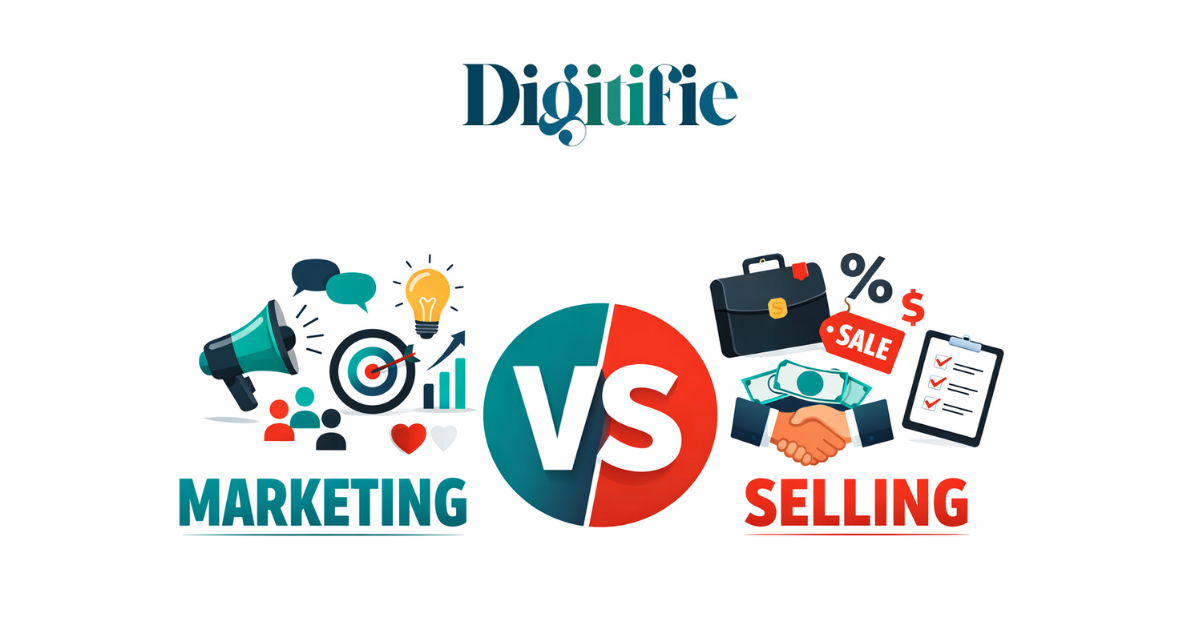
Marketing vs Selling: What’s the Real Difference?
Marketing vs selling is one of the most misunderstood concepts in business. Many people believe marketing and selling are the same, but they play very different roles in business growth. Understanding the real difference between marketing vs selling helps businesses attract the right customers and build long-term success.
Companies that focus only on selling often struggle to retain customers, while marketing-driven businesses grow with trust, authority, and loyalty.
Table of Contents
- Introduction to Marketing vs Selling
- What Is Marketing?
- What Is Selling?
- Marketing vs Selling: Key Differences
- Marketing vs Selling Examples
- Why Marketing Is More Important in the Long Run
- Can Marketing and Selling Work Together?
- Final Thoughts
Introduction to Marketing vs Selling
Marketing vs selling is not about choosing one over the other. It is about understanding how each function contributes to business success. Marketing focuses on identifying customer needs, while selling focuses on converting those customers into buyers.
When marketing is done correctly, selling becomes easier and more effective.
What Is Marketing?
Marketing is the process of understanding customer needs and creating value before a sale happens. It includes market research, branding, content creation, communication, and relationship building.
Marketing focuses on:
- Understanding the target audience
- Solving customer problems
- Building brand awareness
- Creating trust and loyalty
According to the American Marketing Association, marketing is about creating, communicating, and delivering value to customers.
What Is Selling?
Selling is the process of persuading customers to purchase a product or service. It is focused on closing deals and generating immediate revenue.
Selling focuses on:
- Highlighting product features and benefits
- Using persuasion techniques
- Achieving short-term sales targets
- Building transaction-based relationships
Selling usually begins after the product or service is already developed.
Marketing vs Selling: Key Differences
1. Focus
Marketing focuses on customer needs, while selling focuses on the product.
2. Approach
Marketing is a long-term and strategic process. Selling is short-term and tactical.
3. Customer Relationship
Marketing builds long-term relationships, whereas selling aims for immediate transactions.
4. Goal
The goal of marketing is customer satisfaction and brand loyalty. The goal of selling is revenue generation.
5. Communication Style
Marketing uses education, storytelling, and value-driven content. Selling relies on promotion and persuasion.
6. Time Frame
Marketing starts before the product is created. Selling starts after the product is ready.
7. Business Impact
Marketing supports sustainable growth, while selling delivers quick results.
Marketing vs Selling Examples
Marketing Example
A business publishes educational blogs, social media posts, and email content to help customers understand their challenges. Over time, customers trust the brand and choose it naturally.
Selling Example
A salesperson directly contacts potential customers and offers discounts to close sales quickly.
Both approaches are important, but marketing builds authority while selling creates urgency.
Why Marketing Is More Important in the Long Run
Modern customers research before making a purchase. They read blogs, compare brands, and check reviews. This is where marketing plays a crucial role.
Marketing helps businesses:
- Attract the right audience
- Reduce dependence on aggressive selling
- Build strong brand credibility
- Increase customer retention
Businesses that rely only on selling often struggle with trust, while marketing-focused businesses grow consistently.
Can Marketing and Selling Work Together?
Yes, marketing and selling work best when aligned. Marketing creates awareness and demand, while selling converts interested prospects into customers.
When both teams collaborate, businesses achieve higher conversions and long-term growth.
Final Thoughts
Marketing vs selling is not a competition. Marketing builds the foundation, and selling completes the process.
If you want sustainable business growth, start with marketing. When customers trust your brand, selling becomes effortless.
To continue learning about digital strategies and business growth, explore our other blogs.