Common Marketing Myths Business Owners Believe
Marketing myths continue to misguide business owners into making decisions that hurt growth instead of helping it. Many companies struggle not because marketing is ineffective, but because they rely on false assumptions about how marketing actually works.
Understanding what marketing truly involves — and separating facts from misconceptions — is essential for long-term business success.
Table of Contents
- Why Marketing Misconceptions Exist
- Marketing Myths Business Owners Still Believe
- How These Misconceptions Damage Growth
- Why Marketing Myths Spread So Easily
- How to Build a Smarter Marketing Foundation
- Final Thoughts
Why Marketing Misconceptions Exist
Many common misunderstandings about marketing come from outdated advice, viral success stories, and incomplete case studies. What works for one business at a specific stage is often misunderstood as a universal rule.
When business owners follow trends instead of understanding fundamentals, marketing becomes inconsistent and unpredictable.
Marketing Myths Business Owners Still Believe
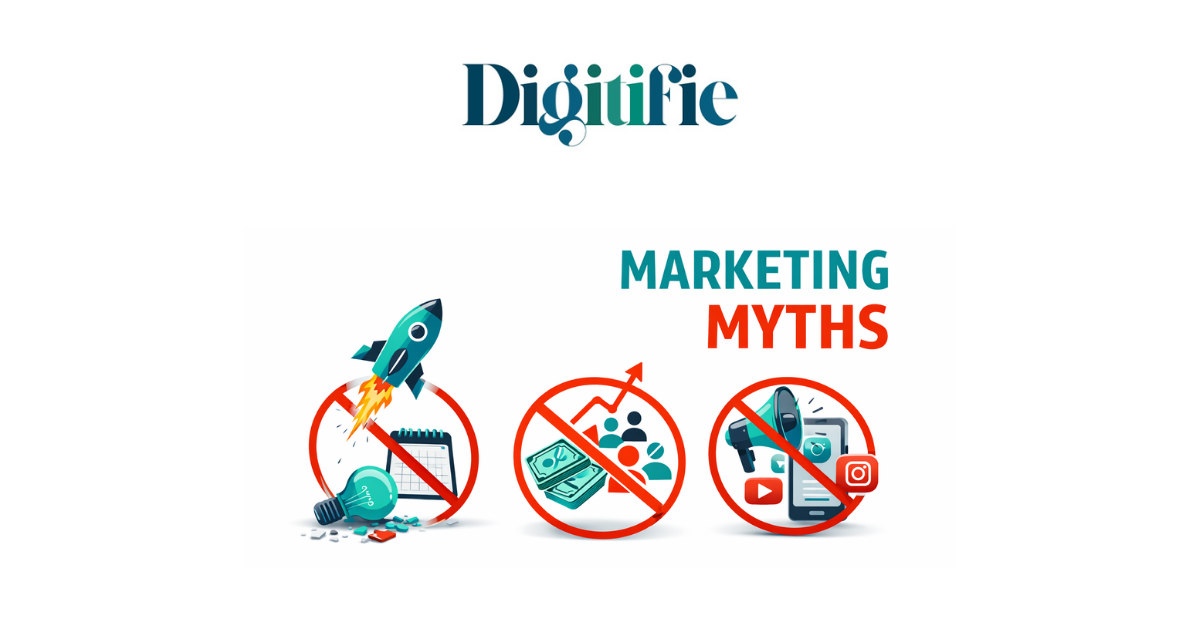
Myth 1: Marketing Is Only Advertising
Marketing goes far beyond ads. It includes positioning, messaging, trust-building, brand perception, and customer experience.
Myth 2: A Good Product Automatically Sells
Even excellent products fail without visibility and communication. Customers must understand value before they buy.
Myth 3: More Traffic Means More Sales
Traffic without intent rarely converts. Strategy matters more than numbers.
Myth 4: Marketing Produces Instant Results
Marketing is a long-term process. Expecting overnight success often leads to poor decisions and wasted budgets.
Myth 5: Social Media Alone Is Enough
Social media supports growth but cannot replace a complete marketing ecosystem.
Myth 6: Marketing Is an Optional Cost
Not investing in marketing usually costs more in lost opportunities than doing it correctly.
How These Misconceptions Damage Growth
Believing outdated ideas about marketing often leads to:
- Unclear brand positioning
- Low customer trust
- Inconsistent sales performance
- Wasted marketing budgets
These issues compound over time and slow long-term business growth.
Why Marketing Myths Spread So Easily
Marketing misinformation spreads quickly because short-form content simplifies complex strategies. Business owners often rely on viral advice, influencer opinions, or incomplete online case studies.
Social platforms amplify these ideas, making marketing appear easier than it really is. Without proper evaluation, these beliefs become widely accepted and hard to challenge.
How to Build a Smarter Marketing Foundation
Start With Strategy, Not Tools
Define your audience, goals, and value proposition before choosing platforms or tactics.
Measure Business Impact
Focus on conversions, retention, and customer trust rather than vanity metrics.
Stay Consistent Over Time
Marketing success compounds with consistent effort and realistic expectations.
Expert Insight
When marketing aligns with business objectives, growth becomes predictable instead of random.
Final Thoughts
Marketing myths quietly damage businesses when left unchallenged. Marketing works best when it is strategic, customer-focused, and consistent.
By questioning assumptions and focusing on fundamentals, businesses can build marketing systems that support sustainable growth.
For additional perspectives on marketing strategy and business growth, explore articles published by Forbes Business Council .
For hands-on guidance, visit our digital marketing services.