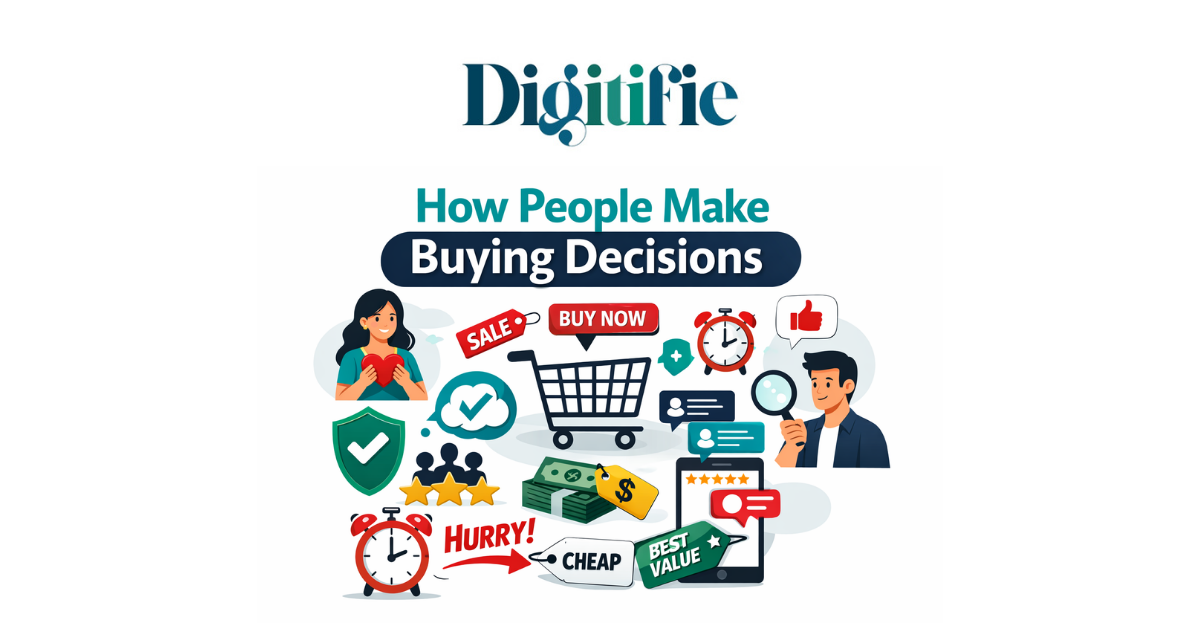
How people make buying decisions is very different from what most businesses assume. People believe they buy logically, but psychology shows that emotions drive decisions first and logic follows later to justify the purchase.
Understanding how people make buying decisions allows businesses to design better marketing strategies and improve conversions. Brands offering digital marketing services can use buying psychology to influence real customer behavior.
Table of Contents
- How People Make Buying Decisions
- Why Emotions Drive Buying Decisions
- The Role of Trust in the Buying Process
- Social Proof and Its Impact on Purchases
- Price vs Value in Decision Making
- The Power of Urgency and Scarcity
- How Brands Influence Buying Decisions
- Final Thoughts
How People Make Buying Decisions
How people make buying decisions depends heavily on emotional triggers. According to consumer psychology research published on Psychology Today , most purchasing decisions are made subconsciously before logical evaluation begins.
This explains why storytelling, brand identity, and emotional messaging outperform feature-focused marketing.
Why Emotions Drive Buying Decisions
Emotions are the foundation of how people make buying decisions. Consumers buy products that make them feel confident, secure, excited, or valued.
Luxury brands sell status, fitness brands sell confidence, and tech brands sell innovation. Emotional branding creates stronger trust and loyalty.
Emotional triggers that influence purchases
Fear of missing out, belonging, trust, and personal identity strongly influence buying behavior and shorten decision-making time.
The Role of Trust in the Buying Process
Trust is one of the most powerful factors in how people make buying decisions. Consumers prefer brands that appear transparent, professional, and consistent.
Clear refund policies, customer testimonials, and honest messaging help reduce perceived risk during the buying process.
How brands build trust effectively
Trust grows when brands use real reviews, social proof, secure payment systems, and consistent communication across platforms.
Social Proof and Its Impact on Purchases
Social proof strongly influences how people make buying decisions. When buyers see others using and recommending a product, confidence increases.
Reviews, influencer endorsements, and user-generated content reassure customers that they are making the right choice.
Examples of powerful social proof
Bestseller tags, verified reviews, and visible customer success stories reduce doubt and accelerate buying decisions.
Price vs Value in Decision Making
How people make buying decisions depends more on perceived value than actual price. Customers willingly pay more when the benefits are clearly explained.
Value-based messaging focuses on outcomes, solutions, and emotional satisfaction rather than discounts.
Why perceived value matters more than cost
When customers understand how a product solves their problem, price becomes a secondary factor.
The Power of Urgency and Scarcity
Urgency significantly impacts how people make buying decisions. Limited-time offers and low-stock alerts encourage faster action.
Scarcity works best when it feels authentic and honest, maintaining long-term trust.
Effective urgency techniques
Countdown timers, seasonal offers, and exclusive access are proven urgency tactics.
How Brands Influence Buying Decisions
Successful brands design every marketing touchpoint around how people make buying decisions. Website layout, copy, and calls-to-action all matter.
Simple navigation and clear messaging reduce friction and improve conversions.
Marketing elements that shape decisions
Colors, headlines, storytelling, and customer experience strongly influence purchasing behavior.
Final Thoughts
Understanding how people make buying decisions is essential for sustainable business growth. People buy emotionally, justify logically, and stay loyal to trusted brands.
Businesses that focus on psychology instead of aggressive selling achieve higher conversions and stronger customer relationships.