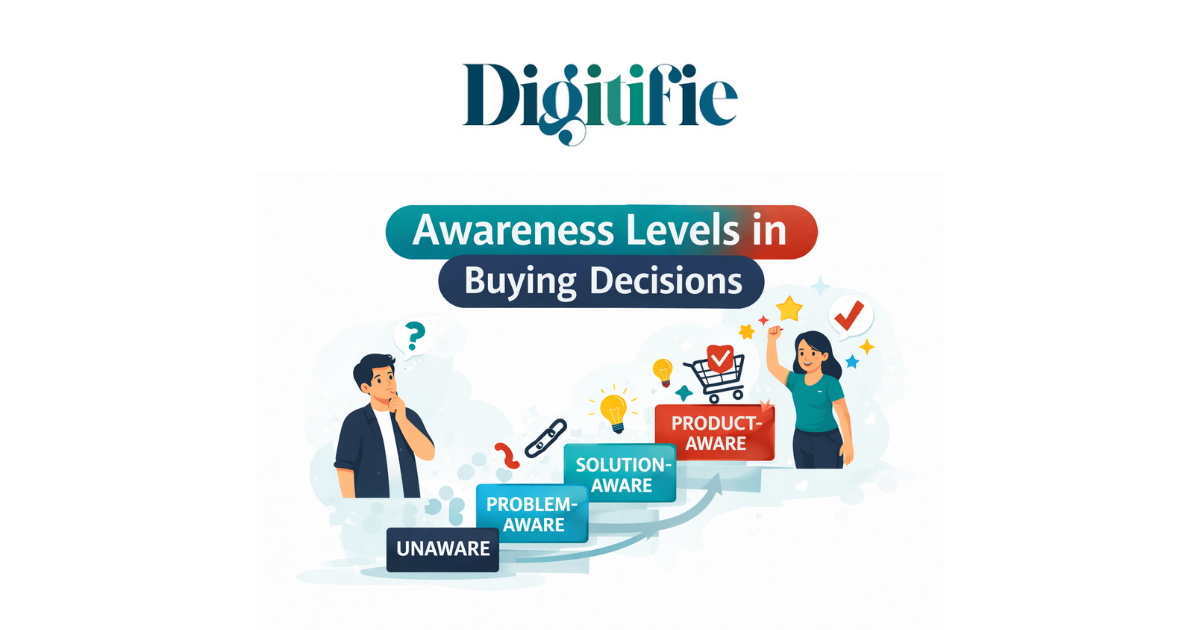
Awareness levels in buying decisions determine how consumers think, evaluate options, and move toward a purchase. Buyers do not make instant decisions. Instead, they pass through different awareness stages that influence trust, perception, and action.
When marketing messages align with a customer’s awareness level, buying decisions become easier and more confident.
Table of Contents
- Understanding Awareness Levels in Buying Decisions
- Why Awareness Levels Influence Consumer Behavior
- Key Awareness Stages Explained
- How Awareness Levels Shape Marketing Strategy
- Emotional and Rational Awareness
- Common Brand Mistakes
- Final Thoughts
Understanding Awareness Levels in Buying Decisions
Awareness levels in buying decisions refer to how familiar a consumer is with a problem, solution, or brand. These levels influence how much information, trust, and reassurance a buyer needs.
A customer who is unaware requires education, while an aware customer requires clarity and confidence.
Why Awareness Levels Influence Consumer Behavior
Consumer behavior shifts dramatically depending on awareness. Low awareness creates hesitation, while high awareness builds certainty.
Buyers with higher awareness levels in buying decisions are more receptive to offers and make faster choices.
Key Awareness Stages Explained
Unaware stage
Consumers do not recognize a problem. Content should focus on insight, education, and relevance.
Problem-aware stage
Consumers recognize an issue but lack clarity. Messaging should explain pain points and consequences.
Solution-aware stage
Consumers know solutions exist and compare options. Differentiation becomes important.
Product-aware stage
Consumers know the brand but need trust signals such as reviews, proof, and guarantees.
Most-aware stage
Buyers are ready to act. Clear calls-to-action and urgency work best.
How Awareness Levels Shape Marketing Strategy
Successful marketing aligns content with awareness levels in buying decisions. Selling too early often pushes customers away.
Research published by Psychology Today shows that people respond best when information matches their current awareness.
Emotional and Rational Awareness
Awareness is not purely logical. Emotional awareness often appears before rational understanding.
Buyers may feel discomfort or desire first and then search for logical justification.
Common Brand Mistakes
Many brands treat all visitors as ready-to-buy customers. This ignores awareness levels and reduces conversions.
Businesses offering digital marketing services often segment audiences by awareness to improve decision-making journeys.
Final Thoughts
Awareness levels in buying decisions shape how consumers think, feel, and act. Ignoring them leads to wasted marketing effort.
Brands that respect awareness levels create smoother journeys, stronger trust, and better long-term results.