
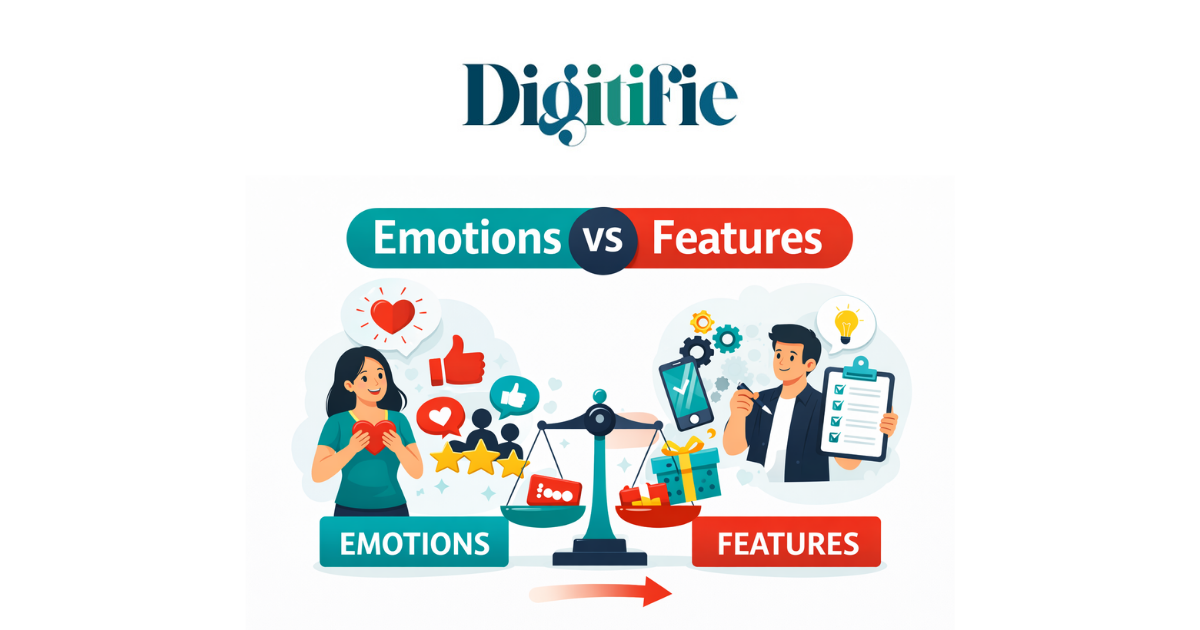
Emotions in marketing play a far greater role in influencing buying decisions than product features or technical specifications. While features explain what a product does, emotions explain why people should care. In highly competitive markets, emotional connection often becomes the deciding factor.
When consumers are faced with multiple options offering similar features, emotions guide trust, attention, and long-term brand loyalty.
Table of Contents
- Understanding Emotions in Marketing
- Why Features Alone Fail to Convert
- The Psychology Behind Emotional Buying
- Emotional Branding vs Functional Branding
- Storytelling as an Emotional Trigger
- Trust, Identity, and Brand Loyalty
- How Brands Apply Emotional Marketing
- Final Thoughts
Understanding Emotions in Marketing
Emotions in marketing refer to the strategic use of human feelings such as happiness, fear, trust, excitement, or belonging to influence consumer behavior. People rarely make decisions based purely on logic.
Emotional responses help brands become memorable and relatable, creating deeper connections beyond product functionality.
Why Features Alone Fail to Convert
Product features communicate value, but they rarely inspire action on their own. Consumers may understand features, yet still feel indifferent toward a brand.
For instance, a phone’s battery life is a feature, but the emotional promise of staying connected to loved ones is what truly motivates purchase decisions.
The Psychology Behind Emotional Buying
Scientific research shows that emotions are central to decision-making. Logical reasoning supports choices, but emotions initiate them.
According to insights from Psychology Today , emotional reactions strongly affect how consumers evaluate brands, pricing, and perceived value.
Emotional Branding vs Functional Branding
Functional branding focuses on what a product does, while emotional branding focuses on how a brand fits into a customer’s lifestyle and identity.
Brands that prioritize emotional branding are more likely to build long-term relationships and reduce price sensitivity.
Real-world examples
Brands like Apple and Nike rarely promote features directly. Instead, they sell aspiration, confidence, and a sense of belonging.
Storytelling as an Emotional Trigger
Storytelling transforms marketing messages into meaningful experiences. A well-told story allows consumers to emotionally relate to a brand.
Stories humanize businesses, making them more trustworthy and memorable in crowded digital spaces.
Trust, Identity, and Brand Loyalty
Trust is built faster through emotional connection than through technical explanations. When customers emotionally identify with a brand, loyalty naturally follows.
This emotional attachment encourages repeat purchases and long-term engagement.
How Brands Apply Emotional Marketing
Modern brands use emotions in marketing through visuals, messaging tone, customer stories, and value-driven communication.
Businesses offering digital marketing services often focus on emotional positioning to help brands stand out and connect with their ideal audience.
Final Thoughts
Features may inform, but emotions persuade. In today’s competitive landscape, emotional connection is a powerful advantage.
By understanding and applying emotional marketing strategies, brands can influence buying decisions, build trust, and create lasting impact beyond features alone.


What do you think?
Hey there, folks! Checked out jilibet by donnalyn. Sounds interesting. If you want more information, take a look for yourself using this link: jilibet by donnalyn
Jilibet’s bonuses are the real deal! Been playing here for a while, and they always have something going on. Keeps things interesting. Level up your gameplay: jilibet bonus
Is the fb777 app any good? Should I download it or just stick with the website? Any feedback appreciated. fb777 app
Finally found a site that actually cares about user experience. The bonuses are generous and the support team is helpful. Love phskycomcasinologin.
The app version is so much better than the mobile web view. Super intuitive and everything is right at my fingertips. Get it from 1xbetdownloadapp.
Super easy access and the loading speed is impressive. I love how everything is organized, making it easy to find my favorite games. Great vibes over at 991jililink.
The JILI slots here are just hitting different today! I managed to get a decent win and the process of claiming it was very straightforward. ph877jili is the way to go.