Table of Contents
- Why Marketing Feels Slow
- The Expectation vs Reality Gap
- 7 Reasons Marketing Takes Time
- Why Fast Marketing Usually Fails
- How to Speed Up Marketing the Right Way
- Final Thoughts
Why Marketing Feels Slow (And Why That’s Normal)
Marketing feels slow for almost every business at some point. You post consistently, run ads, publish content, and still feel like results are crawling. This often leads people to think marketing is not working — when in reality, it’s working exactly as it should.
If you’ve ever wondered why marketing feels slow, this guide will help you understand the psychology, the process, and how growth actually happens.
If you’re struggling to see results, our digital marketing services are designed to build long-term growth, not short-term spikes.
Why Marketing Feels Slow for Most Businesses
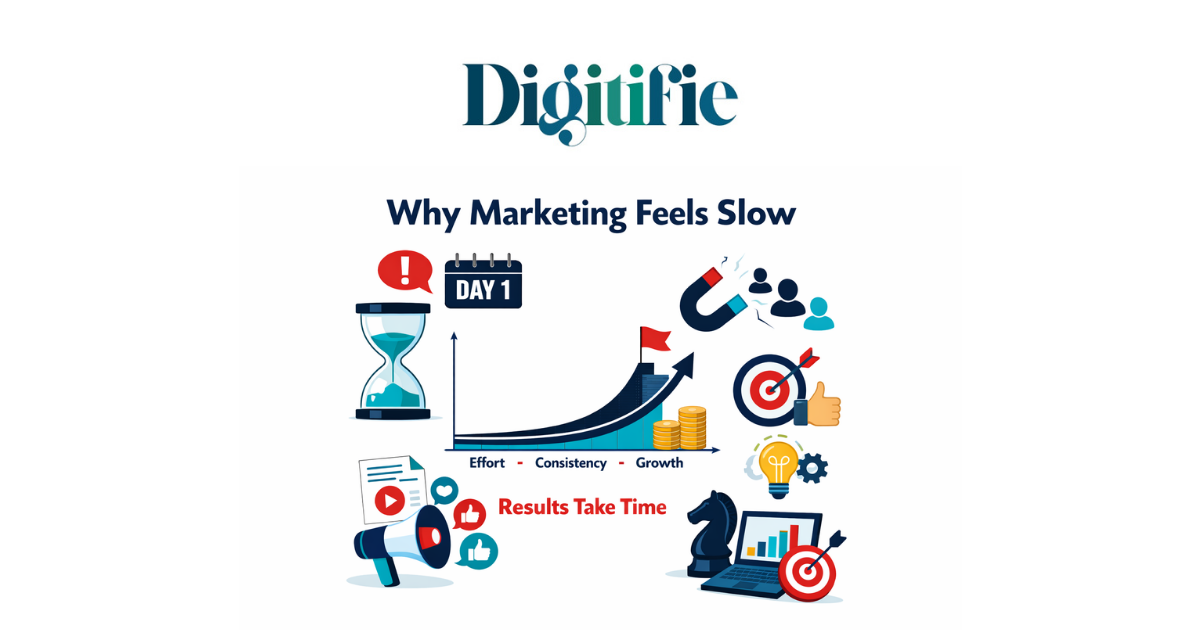
Marketing feels slow because people expect immediate outcomes from long-term systems. Unlike sales, marketing is not a switch — it’s a process that compounds over time.
When someone sees your brand today, they rarely buy today. They observe, compare, forget, remember, and only then decide.
That delay is normal.
The Expectation vs Reality Gap in Marketing
Most businesses expect:
- Instant leads
- Immediate sales
- Viral reach
- Overnight growth
But real marketing works like:
- Trust building
- Repeated exposure
- Familiarity
- Gradual momentum
This mismatch is the main reason marketing feels slow.
How to Speed Up Marketing the Right Way
Marketing feels slow, but you can make it smarter with the right strategy and execution.
Explore our marketing and growth services to build systems that compound results over time.
What Research Says About Why Marketing Feels Slow
Multiple studies confirm that marketing feels slow because customer decision-making is driven by trust, repetition, and familiarity rather than instant logic.
According to Think with Google, consumers often need multiple brand interactions across channels before they feel confident enough to take action. This means that even when marketing is working, results may not appear immediately.
A report by HubSpot Marketing Research shows that consistent content marketing compounds over time. Brands that publish regularly see stronger long-term ROI compared to those chasing short-term visibility.
Even Google’s own documentation explains that organic growth depends on authority, relevance, and time — not quick hacks or shortcuts. You can explore this further in Google’s official SEO guidelines on how search rankings work.
These insights confirm one core truth: marketing feels slow not because it is broken, but because sustainable growth requires patience, consistency, and trust-building.
Final Thoughts: Slow Marketing Is Healthy Marketing
Marketing feels slow because it’s supposed to be.
Slow marketing protects consumers — and rewards businesses that stay consistent.
If you feel stuck, don’t quit. Refine, focus, and let compounding do its job.
That’s how real growth happens. 🚀