Customers do not buy even when they need a product, and this behavior confuses many business owners and marketers. If a product clearly solves a problem, improves life, or saves money, the logical expectation is that people will purchase it. However, buying decisions are rarely logical. They are driven by psychology, trust, emotions, and perceived risk.
Understanding why customers do not buy even when they need a solution is essential for improving conversions, building stronger brands, and creating effective marketing strategies. In this article, we break down the real reasons behind this behavior and how businesses can fix it.
Why Customers Do Not Buy Even When They Need a Product
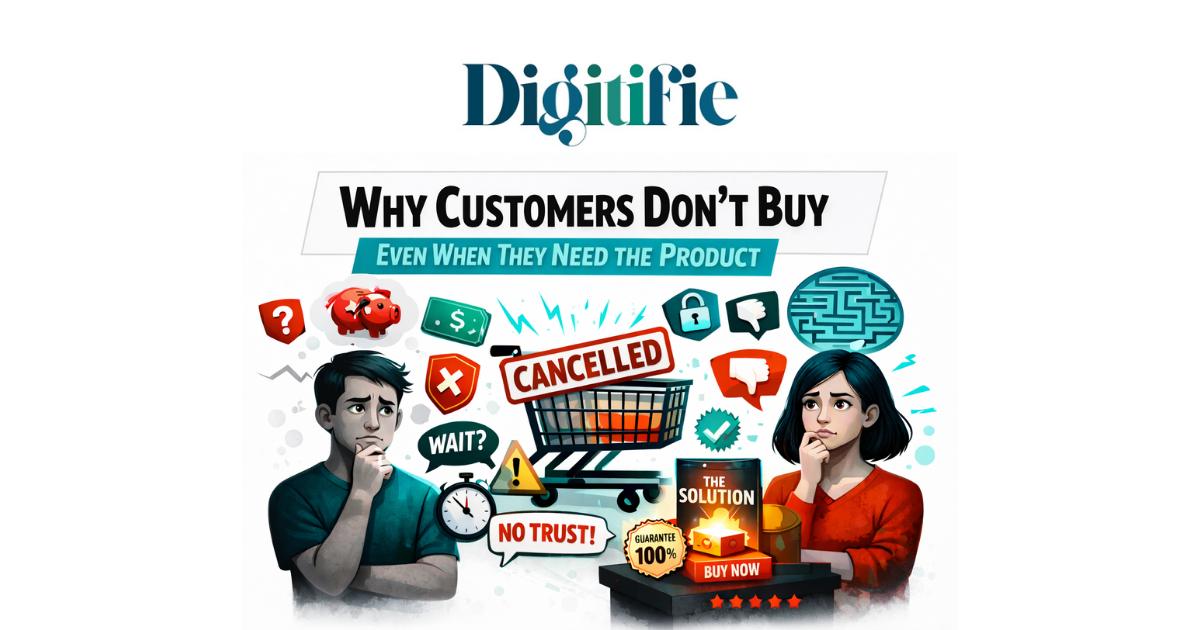
Customers do not buy even when they need something because purchasing is an emotional decision first and a rational one second. Fear, doubt, lack of trust, and uncertainty often overpower logic, even when the need is urgent.
1. Lack of Trust in the Brand
One of the biggest reasons customers do not buy even when they need a product is trust. If users are unsure about your credibility, quality, or authenticity, they hesitate to take action. Weak branding, missing testimonials, or an unprofessional website can instantly reduce trust.
Strong brand positioning and transparency are critical. Businesses that invest in long-term trust-building strategies consistently outperform those focused only on short-term sales.
2. Fear of Making the Wrong Decision
Customers often delay purchases because they fear regret. Even when the product solves their problem, they worry about wasting money, choosing the wrong option, or facing hidden costs later.
This fear explains why customers do not buy even when they need a solution immediately. Clear guarantees, easy refunds, and honest comparisons help reduce this anxiety.
3. Too Many Choices Create Confusion
When customers are overwhelmed with options, decision paralysis occurs. Instead of choosing one product, they postpone the decision entirely. This is another powerful reason customers do not buy even when they need something badly.
Simplifying offers, highlighting best-selling options, and guiding users through decision paths improves conversions significantly.
4. Poor Communication of Value
Customers do not buy even when they need a product if they do not clearly understand its value. Features alone do not sell. Benefits, outcomes, and real-world impact matter far more.
If your messaging focuses only on technical details instead of transformation, potential buyers fail to connect emotionally with your offer.
5. No Sense of Urgency
When there is no urgency, customers delay decisions. Even if they need the product, they believe they can buy it later. This behavior explains why customers do not buy even when they need solutions right now.
Ethical urgency through limited availability, deadlines, or problem awareness encourages timely action without manipulation.
6. Previous Bad Experiences
Past negative experiences strongly influence buying behavior. If customers have been disappointed by similar products or brands before, they become cautious, even when they genuinely need what you offer.
This is why customers do not buy even when they need something that logically makes sense. Social proof, reviews, and case studies help rebuild confidence.
7. Lack of a Clear Buying Journey
Customers do not buy even when they need a product if the buying process feels confusing or incomplete. Missing information, unclear pricing, or complicated checkout flows break momentum.
A structured funnel with education, reassurance, and follow-up is essential. This is where professional digital marketing strategies make a measurable difference.
How Businesses Can Fix This Problem
To overcome the reasons customers do not buy even when they need a product, businesses must focus on psychology, not just promotion. Trust-driven content, simplified messaging, and customer-centric design are key.
Industry leaders like HubSpot consistently emphasize clarity, education, and relationship-based marketing over aggressive selling.
Businesses that invest in understanding customer intent, addressing emotional objections, and building long-term credibility convert more consistently and sustainably.
Final Thoughts
Customers do not buy even when they need a solution because buying is emotional, not logical. When businesses align their messaging, funnels, and trust signals with real human behavior, conversion barriers disappear.
Solving this problem is not about pushing harder — it is about communicating smarter.