Social media marketing has become one of the most powerful tools for business growth in today’s digital world. Whether you run a bakery, boutique, academy, salon, café, studio, coaching center, or any service-based business, social platforms now influence how customers discover, trust, and choose brands.
Yet many business owners still feel confused. They post regularly, try trends, or boost posts—but results remain inconsistent. The issue is not effort. It is lack of strategy.
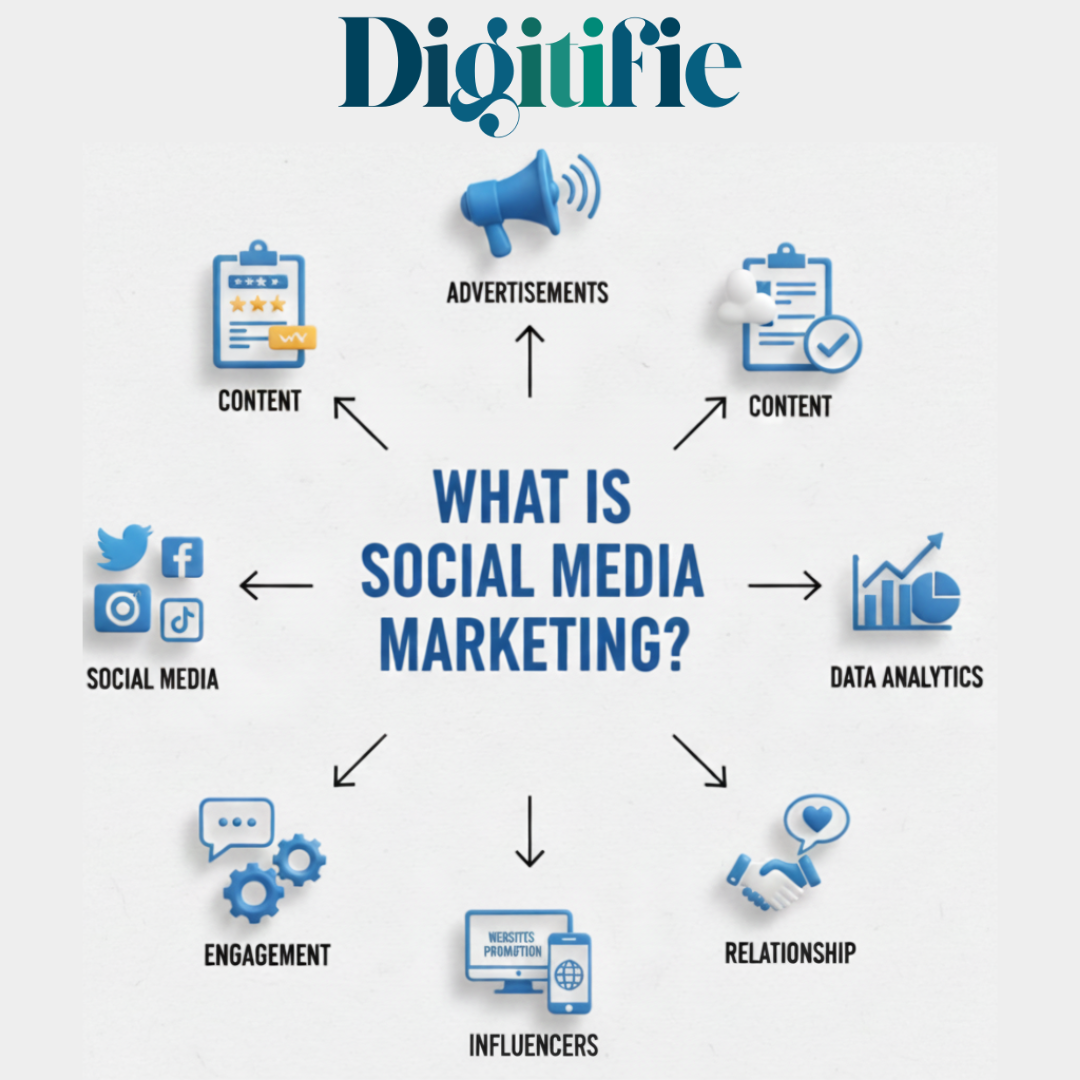
What Is Social Media Marketing?
Social Media Marketing (SMM) is the process of using platforms like Instagram, Facebook, YouTube, LinkedIn, and others to build visibility, trust, and demand for your business.
It includes:
- Promoting your products or services
- Building brand awareness
- Connecting with the right audience
- Driving engagement and conversations
- Generating leads and sales
SMM combines content creation, SEO-friendly captions, analytics, branding psychology, and sometimes paid ads.
Simply put:
👉 Social media is today’s digital word-of-mouth.
Why Social Media Marketing Is Important for Every Business
Your customers already spend hours every day scrolling social platforms. If your business is invisible there, someone else is taking that attention.
Social media helps businesses:
- Reach customers without massive budgets
- Build trust using real and authentic content
- Show work, results, and culture in real time
- Create local and viral visibility
- Stay top-of-mind in competitive markets
- Convert views → engagement → inquiries → sales
One strong idea or relatable video can change how people perceive your brand.
Real-Life Examples: How Businesses Grow Using Smart Social Media
These examples are inspired by practical strategies that work even without heavy budgets.
1. The Bakery That Became a Weekend Favorite
A local bakery started sharing behind-the-scenes moments: kneading dough, decorating cakes, funny mistakes, and customer reactions.
- 10–15 second reels
- Polls for new flavors
- Weekend-special stories
- Kids choosing pastries
Locals reshared the content because it felt real. Weekend footfall doubled within weeks.
Lesson: Real stories outperform polished ads.
2. The Local Academy That Grew Through Activities
A small academy organized open activity sessions. Parents and students shared joyful moments organically.
Reach increased because the content reflected real experiences.
Lesson: If people enjoy it offline, they will share it online.
3. The Fitness Coach Who Built Trust Through Challenges
A solo fitness coach launched short challenges, workout reels, and free mini guides.
People tagged friends and shared progress. Clients joined naturally without aggressive selling.
Lesson: Community-driven content builds long-term trust.
4. The Boutique That Used Real Customers as Models
Instead of professional shoots, the boutique featured everyday customers. The content felt relatable and honest.
Lesson: Authenticity converts better than perfection.
Types of Social Media Marketing You Should Know
1. Content Marketing
Creating reels, posts, stories, and carousels to educate, entertain, and inspire.
2. Paid Social Advertising
Running targeted ads to reach specific audiences based on location, interests, and behavior.
3. Influencer & Creator Collaborations
Working with local or niche creators to reach trusted communities.
4. Community Management
Responding to comments, DMs, reviews, and queries to build relationships.
5. Social Media SEO
Using keywords, hashtags, captions, and location tags to increase discoverability.
6. Trend & Engagement Marketing
Using trending audios, formats, polls, Q&As, and live sessions to boost reach.
Choosing the Right Platforms for Your Business
Best for reels, stories, and visual content.
Strong for local communities, events, and ads.
YouTube
Ideal for tutorials, education, and long-form value.
Perfect for B2B, founders, and professional branding.
WhatsApp & Google Business Profile
Essential for local visibility, reviews, and direct communication.
How to Start Social Media Marketing Today
- Understand your audience clearly
- Choose 1–2 platforms and stay consistent
- Post 4–5 times a week
- Use keywords and hashtags naturally
- Engage before you sell
- Track what works and repeat it
Final Takeaway
Social media does not require big budgets. It requires clarity, creativity, and consistency.
Explore our other marketing blogs or learn fundamentals from the HubSpot Marketing Library .